
Table of Contents
- 5 Best Portable Dog Water Bottles for Hiking: Quick Comparison
- How We Picked These Dog Water Bottles
- 1. Smart Digital Thermal Bottle: Best Insulated Pick for Hot Trails
- 2. Best Collapsible Dog Water Bowl for Hiking: Pairing a Bowl With Your Bottle
- How Much Water Does a Dog Need While Hiking?
- Leak-Proof Design, Materials, and One-Handed Operation
- What to Skip: Filtration Hype and Gear You Don't Need
- Conclusion: Picking Your Dog Water Bottle for the Trail
- Frequently Asked Questions
Last Updated: October 2, 2026
5 Best Portable Dog Water Bottles for Hiking: Quick Comparison
The best portable dog water bottles for hiking solve one problem: getting clean water into your dog without stopping for ten minutes.
This guide from Trending Now Co. looked at capacity, weight, sealing, and one-handed use, then matched each pick to a trail scenario.
Here is the quick version:
| Pick | Best For | Capacity | Key Trait | Price |
|---|---|---|---|---|
| Smart Digital Thermal Bottle | Insulated cold water on hot trails | 450 ml | Vacuum-sealed 316 stainless steel, digital temp readout | $9.33 |
| Collapsible bowl pairing | Dogs who won't drink from a spout | Varies | Silicone bowl packs flat | Varies |
| Dog Walking Belt | Hands-free carry on long walks | N/A | Detachable shockproof leash | $8.58 |
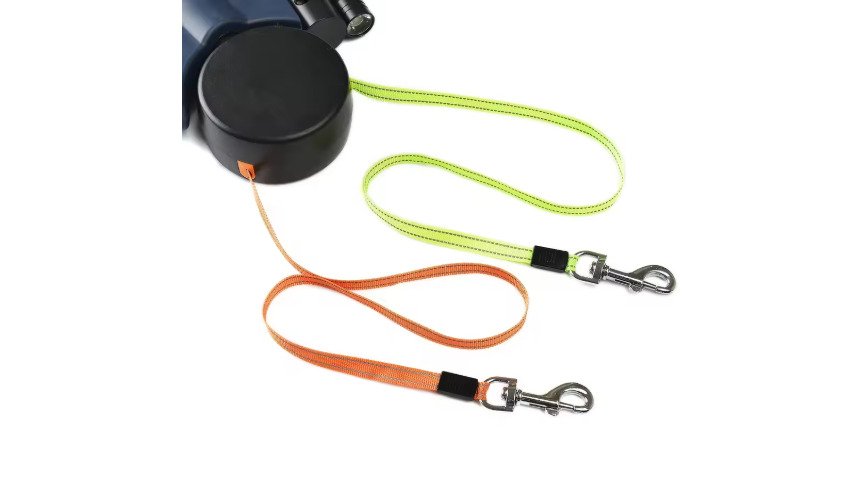
| Auto Double Dog Leash | Two-dog households | N/A | Dual retractable lines | $26.25 |
| Paw & Claw Care Cream | Post-hike paw recovery | 50 g | Moisturizes cracked pads | $3.42 |
How We Picked These Dog Water Bottles
Every bottle here had to survive four tests: seal integrity, one-handed operation, material safety, and loaded weight.


Loaded weight. Water weighs roughly 1 kilogram per liter, so a full 450 ml bottle adds about a pound.
Capacity and weight math. Match bottle capacity to the hydration estimate above, not to what looks convenient.
Integration with your hiking setup. A dog bottle is only useful if it rides where you can reach it. Three carry patterns work:
- Human pack side pocket or hip belt. A 450 ml bottle fits a standard side pocket. A bottle with a rope handle or carabiner loop clips to a hip belt or daisy chain and stays reachable without taking the pack off.
- Dog saddlebag or harness pocket. Bottles up to about 500 ml fit most dog pack side pockets. Keep the load balanced, one bottle per side, and keep total dog-carried weight under roughly 25% of the dog's body weight, which is the common working guideline for canine pack fit.
- Belt or waist pack. A hands-free walking belt with a bottle loop keeps the bottle at hip level, which is the fastest draw on the trail.
Cleaning and maintenance. Silicone gaskets and valves trap residue.

1. Smart Digital Thermal Bottle: Best Insulated Pick for Hot Trails
The Smart Digital Thermal Bottle is our top pick for hot-weather hikes because it keeps water cold for hours and shows the temperature on a built-in digital readout.
The bottle holds 450 ml and uses a double-walled 316 stainless steel liner with a 201 stainless steel shell.
Where it shines:
- Digital temperature measurement, so you know the water is still cold
- Vacuum insulation rated for six to twelve hours
- Drop-resistant build with a rope handle for clipping
Where it falls short: 450 ml is a personal-size bottle, not a shared reservoir.
2. Best Collapsible Dog Water Bowl for Hiking: Pairing a Bowl With Your Bottle
The best collapsible dog water bowl for hiking is a silicone bowl that folds flat and clips to your pack, because most dogs drink more naturally from a bowl than a bottle spout. Pair one with any bottle here to cover both drinking styles.
The bottle is only half the system. A dog that refuses a spout will dehydrate right next to a full bottle, while a collapsible bowl weighs almost nothing and turns any water source into a proper drink.
Look for these traits:
- Food-grade silicone that does not hold odors
- A wide base so it does not tip when a dog paws at it
- A carabiner or clip so it hangs off a belt or pack strap
- Dishwasher-safe construction for easy cleaning after muddy trails
Clean and dry the bowl after every hike, standing water in a folded bowl grows bacteria fast.
How Much Water Does a Dog Need While Hiking?
Most guides repeat one line, about one ounce of water per pound of body weight per day, and stop there.
Here is a working formula you can run in your head on the trailhead:
Baseline: 0.5 to 1 ounce of water per pound of body weight per day for a normal-activity dog. Hiking multiplier: 1.5x for easy, shaded, cool-weather miles; 2x for moderate trails or warm weather; 2.5x to 3x for steep elevation gain, direct sun, or temperatures above 80°F. Per-mile estimate: For most healthy adult dogs, plan on roughly 0.5 to 1.5 ounces per mile depending on size, coat, and conditions.
Smart Digital Thermal Bottle Portable Coffee Mug Stainless Steel Water Bottle →
Run that against real dogs:
| Dog weight | Easy 3-mile hike | Moderate 5-mile hike, 75°F | Steep 6-mile hike, 85°F+ |
|---|---|---|---|
| 15 lb (small breed) | 6-9 oz | 12-18 oz | 18-27 oz |
| 35 lb (medium breed) | 10-14 oz | 20-28 oz | 30-42 oz |
| 70 lb (large breed) | 16-22 oz | 32-44 oz | 48-66 oz |
| 100 lb (giant breed) | 22-30 oz | 44-60 oz | 66-90 oz |
A 450 ml bottle holds about 15 ounces. That covers a 15-pound dog on a moderate five-miler, but not a 70-pound dog on the same hike.
Factors that push the number up, in rough order of impact:
- Temperature and sun exposure. Direct sun on a shadeless ridge can add 50% or more to intake.
- Elevation gain. Climbing works the muscles harder and raises respiratory rate. A 1,500-foot gain over three miles is not the same hike as three flat miles.
- Coat and breed. Double-coated breeds like Huskies, Malamutes, and Newfoundlands run hotter and drink more. Brachycephalic breeds, Bulldogs, Pugs, Boxers, overheat faster and need smaller, more frequent offers.
- Age and fitness. Puppies and senior dogs dehydrate faster than a conditioned adult.
- Pre-hydration. A dog that drank well an hour before the trailhead needs less on the first mile. A dog that just woke up from a nap in the car needs more.
A practical trail rhythm: offer water every 15 to 20 minutes on hot days and every 30 to 45 minutes in cool weather, in small amounts rather than one long drink.
Watch for overheating signs and stop early: heavy panting that does not slow after a rest, thick ropey drool, a stumbling gait, gums that look pale, gray, or brick-red instead of pink, or a dog that lies down and refuses to move. Get to shade, offer small sips, wet the paws and belly, and let the dog cool.
Leak-Proof Design, Materials, and One-Handed Operation
Leak-proof design comes down to the seal and the lid mechanism. A silicone gasket plus a locking lid keeps water out of your pack, and a quick-release button or flip-top makes one-handed operation possible while you hold a leash.
Materials matter for safety. Look for food-grade, BPA-free plastics and 316 stainless steel liners; cheaper bottles use coatings that flake over time.
The Smart Digital Thermal Bottle handles this well with its rope handle and simple lid.
What to Skip: Filtration Hype and Gear You Don't Need
Water filtration for dogs is mostly unnecessary on a day hike where you carry your own water. It matters for long backcountry trips where you refill from streams, and even then a human filter and a clean bowl handle the job.
Skip these:
- Bottles with built-in filters that add weight and cost for a day hike
- Oversized reservoirs you will never finish and will resent carrying
- Gadgets that need batteries beyond a simple temperature readout
- Multi-tool attachments that promise everything and seal poorly
What is worth adding instead: a lightweight collapsible bowl, a spare carabiner, and a small tube of paw cream. The Dog Paw & Claw Care Cream is a 50 g tube that moisturizes cracked pads after a rocky trail, and it costs less than a coffee. The Auto Double Dog Leash earns its place if you hike with two dogs, with dual retractable lines that extend up to three meters each and keep them tangle-free.
Conclusion: Picking Your Dog Water Bottle for the Trail
Hydration is the part of trail safety that gets forgotten until a dog is already struggling.
Trending Now Co. carries the pieces that make this work. The Smart Digital Thermal Bottle keeps water cold and shows the temperature at a glance, the Dog Walking Belt frees your hands on the trail, and the Dog Paw & Claw Care Cream handles recovery once you are back at the car.
Shop Now at Trending Now Co. and build a trail kit your dog will actually drink from.
Frequently Asked Questions
What is the best water bottle for hiking with my dog?
The right pick depends on trail conditions and how long you'll be out. An insulated, vacuum-sealed bottle keeps water cold on hot days, while a lightweight collapsible option saves pack space on short walks. Look for a leak-proof seal, food-grade or BPA-free materials, and a wide mouth you can pour from one-handed. Capacity matters too: a 450ml bottle covers roughly an hour of moderate hiking for a medium dog, so bring more for longer routes.
How much water does a dog need while hiking?
A common guideline is about 0.5 to 1 ounce of water per pound of body weight per day, with more added for heat, distance, and steep terrain. A 50-pound dog might drink 25 to 50 ounces over a full hiking day. Break that into smaller offers every 15 to 20 minutes rather than one large drink. Watch for heavy panting, thick saliva, or lagging behind, which signal your dog needs a water break sooner.
Are portable dog water bottles leak-proof?
Not all of them. Bottles with a silicone gasket and a locking or twist-seal lid hold up best inside a backpack. Test any new bottle by filling it, sealing it, and shaking it over a sink before you trust it on the trail. A leak-proof design also keeps water from soaking your dog's food or your phone. If the listing doesn't mention a seal or lock, treat it as a bottle that needs to stay upright.
What features should I look for in a dog hiking water bottle?
Prioritize four things: a leak-proof seal, food-grade or BPA-free materials, one-handed operation, and a size that fits your pack's side pocket. A carabiner loop or clip makes attachment easy. Insulated, vacuum-sealed walls help on hot days, while a collapsible body helps on short trips. Flow-rate matters too: a wide opening pours fast into a bowl, but a narrow spout gives you more control for dogs that gulp.
Is a collapsible dog water bowl better than a bottle with a built-in trough?
They solve different problems. A collapsible bowl packs flat, holds enough for a full rest stop, and works with any bottle you already own. A bottle with a built-in trough lets you squeeze water straight to your dog without stopping to unpack. Many hikers carry both: a bottle for quick sips mid-trail and a collapsible bowl for longer breaks where the dog can drink at its own pace. Silicone bowls are dishwasher-safe and easy to rinse.