
Table of Contents
- Why Assessing Material Quality Online Matters
- How to Check Fabric Quality Online: Start With the Label
- How to Read Clothing Material Labels for Hidden Quality Clues
- Fabric Weave and Density: What to Look for in Product Photos
- Inspecting Stitching and Seam Quality From Online Listings
- Online Product Quality Checklist: Your Step-by-Step Inspection
- Using Customer Reviews and Seller Questions to Verify Material Claims
- What to Do When Product Photos or Details Are Incomplete
- Frequently Asked Questions
Last Updated: October 15, 2026
Why Assessing Material Quality Online Matters
When you shop online, you can't touch the fabric or examine stitching in person, which is why learning to assess material quality online is essential. You're making a purchase decision based on photos, descriptions, and text alone.
We help shoppers discover trending products with confidence. The difference between a garment that lasts years and one that doesn't often comes down to fabric choice, construction, and honest product details.
This guide walks you through the exact steps to evaluate clothing and fabric items from your screen. You'll learn what to look for in labels, photos, and seller information.
How to Check Fabric Quality Online: Start With the Label
The product label tells you more than you might think. It's your first clue about whether you're looking at quality material or a shortcut product.
Start by finding the fiber content section. This lists what the fabric is actually made of. Natural fibers like cotton, linen, and wool behave differently than synthetics like polyester and nylon. A blend combines both types. The percentage breakdown matters because it affects durability, comfort, and how the garment ages.
Reading Fiber Content Percentages
Fiber content percentages tell you the exact makeup of the fabric. A label might read "100% cotton" or "65% polyester, 35% cotton." These numbers matter because they determine how the garment will perform.
Pure natural fibers tend to breathe better and feel softer, but they may wrinkle more or shrink. Synthetic fibers resist wrinkles and shrinking but trap heat. Most quality garments use blends that balance these traits.
Watch for vague labels that say "fabric blend" without listing percentages. This is a red flag. Honest sellers always break down the exact percentages.
Understanding Natural vs. Synthetic Blends
Natural fibers include cotton, linen, wool, and silk. These breathe well and feel pleasant against skin. They're also more expensive, which is why quality garments often use them.
Synthetic fibers like polyester, nylon, and acrylic are cheaper to produce. They resist wrinkles and hold color well. The problem: they don't breathe as much and can feel plastic-like.
The best blends pair natural fibers for comfort with synthetics for durability. A 60% cotton, 40% polyester blend gives you breathability and wrinkle resistance.
Check the label order too. Fibers are listed by percentage, highest first. If polyester comes first, synthetics dominate the garment.
How to Read Clothing Material Labels for Hidden Quality Clues
Material labels hide quality signals beyond just fiber content. Care instructions, weight indicators, and manufacturing details all point to how well a garment will hold up.
A quality garment label includes specific care instructions. Vague instructions like "wash gently" suggest the maker isn't confident in the fabric's durability. Detailed instructions ("wash in cold water, lay flat to dry") show the maker understands the material and wants you to care for it properly.
Decoding GSM and Weight Indicators
GSM stands for grams per square meter. It measures fabric density and weight. Higher GSM means thicker, heavier fabric. A lightweight cotton shirt might be 150 GSM. A quality winter sweater could be 300+ GSM.
Heavier fabric usually lasts longer because it has more material. A 200 GSM cotton is more durable than 120 GSM cotton. The label might not list GSM directly, but product descriptions often do.
Look for weight descriptions too: lightweight, midweight, or heavyweight. These give you a sense of how the garment will feel and perform. A midweight fabric balances comfort and durability for most uses.
Care Instructions as a Quality Signal
Care instructions reveal how fragile or strong the fabric is. Simple instructions mean the material is durable. Complex instructions mean you need to be careful.
Compare two labels:
- Simple: "Machine wash warm, tumble dry"
- Complex: "Hand wash only, lay flat to dry, avoid bleach, do not wring"
The simple label suggests confident construction. The complex label signals delicate material that needs special handling. Neither is bad, but they tell different stories about durability.
Dry-clean-only labels sometimes indicate quality (many wool and silk pieces require this), but they also mean higher maintenance costs. For everyday wear, machine-washable fabrics are more practical.
Fabric Weave and Density: What to Look for in Product Photos
Product photos reveal a lot about fabric quality if you know what to look for. Weave structure and density determine how the fabric will drape, breathe, and age.
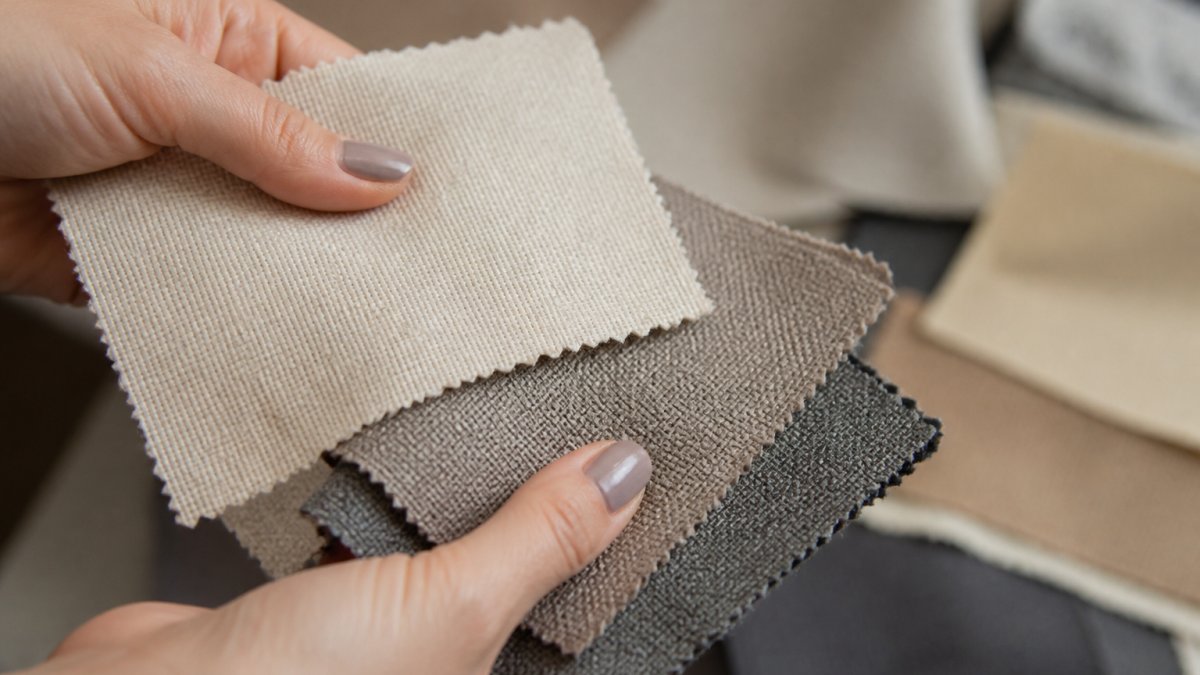
Look at the fabric's texture in photos. Tight weaves show a smooth, uniform surface. Loose weaves look more open and textured. Tight weaves generally last longer because fibers are packed closely together.
Identifying Weave Patterns From Images
Common weave patterns include plain weave, twill, and satin. Each looks different and performs differently.
Plain weave is the simplest: fibers go over and under in a regular pattern. It looks uniform and flat in photos.
Twill weave creates diagonal lines across the fabric. You can see this pattern in denim and khakis. Twill is stronger than plain weave because fibers lock together tightly.
Satin weave has a shiny surface with a smooth feel. In photos, you'll notice the glossy appearance.
Check product photos for visible weave structure. If you can clearly see the weave pattern, the fabric is likely quality.
Spotting Sheen and Light Reflection Clues
Natural fibers like cotton and linen have a soft, matte appearance in photos. Synthetic fabrics often have a shiny or plastic-like sheen.
Look at how light reflects off the fabric in product photos. Soft, diffused light reflection suggests natural fibers or quality blends. Harsh, bright reflection often means synthetics dominate. This matters because synthetic sheen can look cheap and doesn't age well.
Some fabrics are designed to have sheen (satin, silk), so this isn't always a negative. But if a cotton shirt looks overly shiny in photos, it might be heavily treated with chemicals to create that effect.
Inspecting Stitching and Seam Quality From Online Listings
Stitching quality separates durable garments from ones that fall apart. Good stitching is tight, even, and uses the right stitch type for the fabric.
Look for close-up photos of seams and hems. Quality garments show detailed images of stitching.
Examine the stitch pattern in photos. Even, consistent stitches suggest a well-made garment. Crooked, uneven, or skipped stitches indicate rushed manufacturing.
Different fabrics need different stitches. Delicate fabrics need flexible stitches that won't tear. Heavy fabrics need strong lockstitches that won't pull loose.
Check for reinforced seams at stress points like armholes and crotch seams. These areas get pulled the most, so they need extra stitching.
Online Product Quality Checklist: Your Step-by-Step Inspection
Use this checklist every time you shop online. It takes five minutes but catches most quality problems before you buy.
Before You Add to Cart
Follow these steps in order:
-
Read the fiber content label, Write down the percentages. Natural fibers should be at least 50% if you want breathability.
-
Check the weight or GSM, Look in the product description. Heavier fabric usually means better quality.
-
Examine close-up photos, Zoom in on seams, hems, and fabric texture. Look for even stitching and tight weaves.
-
Look for weave details, Can you see the weave pattern clearly? Clear visibility suggests quality construction.
-
Check the seller's return policy, Quality sellers offer easy returns. If returns are hard or expensive, the seller may not stand behind the product.
-
Read recent customer reviews, Look for mentions of durability, fit, and material feel. Ignore one-off complaints, but watch for patterns.
-
Compare to similar items, Look at competing products. Do others have better stitching, higher fiber content, or more detailed photos?
Red Flags That Signal Lower Quality
Stop shopping if you see these signs:
- No fiber content listed or vague descriptions like "fabric blend"
- No close-up photos of seams or stitching
- Visible loose threads or crooked stitches in product photos
- Overly shiny appearance on cotton or linen items
- Vague care instructions like "wash gently"
- No weight or GSM information provided
- Photos taken in poor lighting that hide fabric details
- Seller has no return policy or charges high return fees
- Overwhelmingly negative reviews about durability
- Price significantly lower than similar quality items
Using Customer Reviews and Seller Questions to Verify Material Claims
Customer reviews are your window into how material actually performs after purchase. Read them strategically to spot quality issues.
Look for reviews that mention specific durability problems.
Pay attention to reviews that mention fabric feel. "Feels cheap" or "plastic-like" suggests synthetic dominance. "Soft and breathable" suggests quality natural fibers.
Use the seller's Q&A section to ask specific questions. Ask about fabric sourcing, manufacturing location, and quality control.
Ask about shrinkage rates. Honest sellers will tell you if a garment shrinks.
Ask about pilling and fading. These are common problems with low-quality fabrics. Quality sellers acknowledge these issues and explain how they minimize them.
What to Do When Product Photos or Details Are Incomplete
Sometimes sellers provide limited information or poor photos.
Request better photos from the seller. Most online retailers let you message sellers directly.
If the seller won't provide more information, assume lower quality. A confident seller has nothing to hide.
Look for third-party reviews on other sites. Sometimes customers post detailed reviews with their own photos on review platforms.
Check if the product is sold on multiple platforms.
Request a sample if possible. Some sellers will send fabric samples for a small fee.
Watch for products marked "final sale" or "non-returnable." These are often clearance items or lower-quality stock.
Frequently Asked Questions
How can you tell if fabric is good quality online?
Check the fiber content label first, natural fibers like cotton and wool signal durability, though blends can offer better value. Look at product photos for tight, even weave patterns and consistent color. Read customer reviews for specific feedback on durability, shrinkage, and how the fabric feels after washing. Ask the seller questions if details are missing, and request additional photos showing seams and stitching quality.
What should you do if an online listing does not provide enough material details?
Contact the seller directly through the platform's messaging system and ask specific questions: fiber percentages, weight in grams per square meter (GSM), weave type, and care instructions. Request close-up photos of seams, stitching, and the fabric label itself. If the seller cannot or will not provide this information, it's a red flag. Check customer reviews to see if others mention quality concerns or if the product performs differently than advertised.
Is 60% cotton and 40% polyester a good fabric blend?
Yes, this blend is common and generally reliable. The 60% cotton provides breathability and natural feel, while 40% polyester adds durability, wrinkle resistance, and shape retention. This ratio works well for everyday clothing and household textiles. However, the overall quality still depends on thread count, weave density, and stitching. Always check the fabric weight (GSM) and customer reviews specific to that product, as the blend alone doesn't guarantee durability.
What does GSM mean in fabric testing?
GSM stands for grams per square meter and measures fabric weight and density. Higher GSM typically indicates thicker, more durable fabric, for example, 200+ GSM is considered heavy and sturdy, while 100-150 GSM is lightweight. The ideal GSM depends on the garment type: t-shirts usually range from 150-200 GSM, while dress shirts fall between 100-130 GSM. When assessing material quality online, look for GSM listed on the product label or specifications; it's a measurable indicator of fabric substance.
Assessing material quality online is a skill that gets easier with practice. Start with the label, examine photos carefully, and read customer reviews with a critical eye. Over time, you'll develop an instinct for spotting quality before you buy. At Trending Now Co., we believe you deserve products that last. Use these steps to shop with confidence and find items that truly deliver on quality and value.