
Table of Contents
- The Benefits of Boutique Shopping Go Beyond the Products
- Small Business vs Big Box Retail: What Actually Changes
- How to Find Trending Boutique Items Without Wasting Hours
- Why Boutique Trend Stores Are Replacing the Mall Run
- How to Spot a True Boutique Trend Store
- Boutique Shopping and Sustainability: What to Know
- Conclusion
- Frequently Asked Questions
Last Updated: September 25, 2026
The Benefits of Boutique Shopping Go Beyond the Products
Why shop at boutique trend stores instead of scrolling endless supercenter listings? The answer isn't just about what you buy. It's about how the entire experience makes you feel.
This guide from Trending Now Co. breaks down seven reasons the switch is worth it, from curation to community to the sheer joy of discovery shopping.
Boutique shopping is the practice of buying from small-scale retailers that hand-select their inventory, offer personalized service, and often source from local vendors or independent makers. That definition matters because it explains the core difference: a boutique's value comes from what it removes from your plate, not what it adds to a shelf.
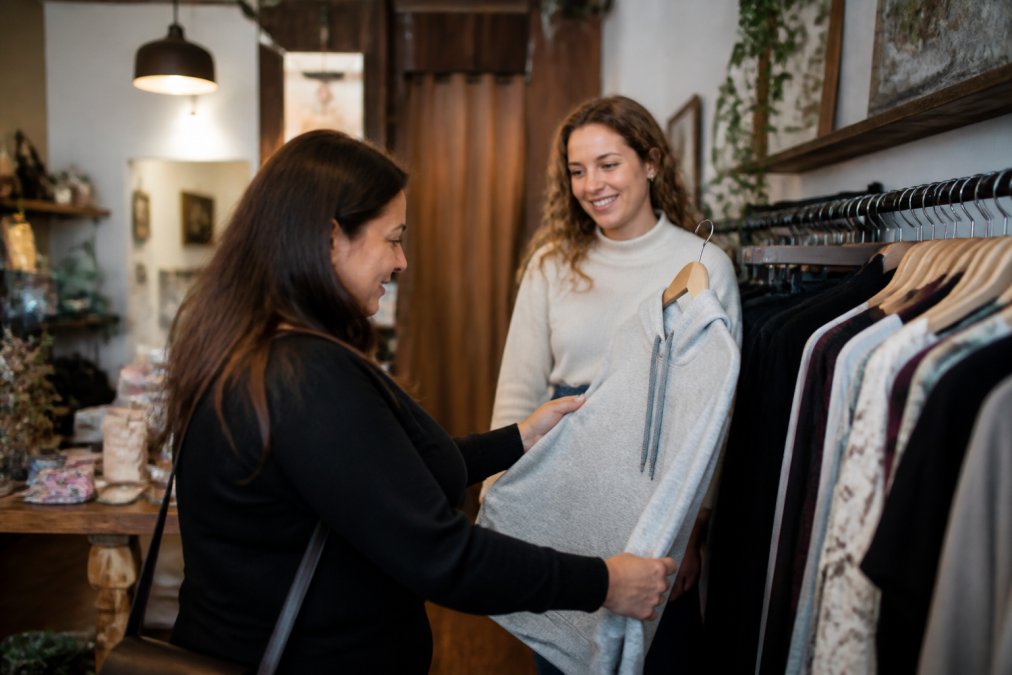
Why Curation Beats Endless Aisles
Endless choice sounds great until you're 40 minutes deep and still empty-handed. A curated selection flips that problem on its head. Instead of sorting through thousands of near-identical options, you're choosing from a tight edit someone already vetted for quality and relevance.
Many shoppers find that fewer, better options actually speed up decisions. You spend less time comparing and more time enjoying what you picked. That's the quiet benefit of boutique shopping: it respects your time as much as your taste.
Personal Service You Won't Find at a Supercenter
A common mistake shoppers make is assuming service is a nice-to-have. In practice, it's the whole point.
That kind of guidance rarely happens in a supercenter, where staff manage hundreds of departments. It's the difference between a transaction and a conversation.
Small Business vs Big Box Retail: What Actually Changes
The small business vs big box retail comparison usually gets framed as price versus convenience. That framing misses the bigger shift. When you buy from a small-scale retailer, your money circulates differently, your feedback reaches a real person, and the store's inventory reflects what locals actually want.
Big box stores win on volume and standardization. Boutiques win on responsiveness.
The Local Economy Effect
This is the angle most retail-industry coverage skips, and it is the one that matters most to a shopper deciding where to spend.
There is also a feedback loop that big-box shoppers rarely get.
The Honest Trade-Offs
The trade-off is real and worth naming. Boutiques can't always match supercenter pricing, because they don't buy in the same volume and don't have the same distribution leverage. They also can't guarantee the same return window, the same one-day shipping, or the same depth of size runs. If you need a specific item in a specific size by a specific date, a supercenter or a major marketplace is often the safer bet.
What you get in exchange is curation, service, and a shopping journey that doesn't feel like a warehouse run, plus the knowledge that a larger share of what you spent is still working in your community next month. That is not a slogan. It is the direct result of where the money goes after the transaction closes.
How to Find Trending Boutique Items Without Wasting Hours
Finding trending boutique items comes down to three habits: follow the curators, not the algorithms; check restock schedules; and lean on stores that update inventory often.
Here's a quick comparison of where shoppers typically look and what each approach costs you:
| Approach | Time Cost | Discovery Quality | Best For |
|---|---|---|---|
| Endless marketplace scroll | High | Low, repetitive | Price comparison |
| Social media trend feeds | Medium | Medium, hit-or-miss | Viral gadgets |
| Curated boutique platforms | Low | High, pre-vetted | Unique finds fast |
| Medium | High, tactile |
A practical shortcut: bookmark two or three curated sources and check them weekly rather than daily. You'll catch new arrivals without burning hours.
2023 Men's Plus Size Fleece Zip Mock →
Why Boutique Trend Stores Are Replacing the Mall Run
The mall run is losing ground because it solves the wrong problem. Malls offer variety, but variety isn't the bottleneck anymore. Discovery is. Shoppers already know what they want; they just can't find it efficiently among mass-market inventory.
Boutique trend stores answer that directly. A small retail footprint with a sharp point of view beats a sprawling one with no perspective. And the rise of shop-in-shop concepts, where smaller brands operate inside larger retail spaces, shows how the retail footprint itself is being rethought.
Shop-in-Shop Concepts and the New Retail Footprint
Shop-in-shop setups let independent brands reach foot traffic without opening standalone locations. For shoppers, it means discovering artisanal goods and exclusive merchandise in places they already visit.
For boutique operators, it's a lower-risk way to test a market. This is retail innovation happening quietly, one small counter at a time.
How to Spot a True Boutique Trend Store
Not every store calling itself a boutique deserves the label. Here's a checklist to separate the real thing from a marketing sticker:
- Inventory rotates regularly, not seasonally in bulk
- Staff can name the makers or sources behind products
- The selection is edited, not exhaustive
- Product sourcing favors small vendors or independent labels
- Service continues after the sale, with a clear return process
- The store has a distinct point of view, not a copy of mass trends
- Prices reflect quality and sourcing, not just brand markup
If a store checks five or more of these, you're dealing with a genuine boutique. If it checks two, you're in a big-box store with better lighting.
Boutique Shopping and Sustainability: What to Know
Sustainable retail and boutique shopping overlap more than most people realize, but the overlap is not automatic, and the reason it exists is mechanical, not moral. Smaller inventories mean less overproduction and less dead stock headed for clearance bins. Curated selections tend to favor durable, artisanal goods over disposable trend cycles. Those two facts do most of the work.
Here is the mechanism in plain terms.
How to Verify a Store's Sustainability Claims
Most shoppers have no way to tell a genuine ethical sourcing practice from a marketing sticker. A few concrete checks close that gap:
- Ask for the maker, not the category. "We carry small brands" is a vibe. "This is made by a two-person studio in the region" is a fact you can look up.
- Look for third-party certifications on the tag or the brand's site. Common ones in the U.S. market include Fair Trade Certified, B Corp certification, Global Organic Textile Standard (GOTS) for organic fiber, and bluesign for textile chemistry. None of these is a guarantee of perfection, but each requires an independent audit rather than a self-declaration.
- Check the return and repair policy. A store that stands behind durability with a repair option or a generous return window is signaling that it expects the product to last.
- Watch the markdown cadence. A boutique that runs deep clearance every few weeks is moving volume, not curating. A boutique that sells through and restocks selectively is behaving like a sustainable retailer even if it never uses the word.
- Ask how often inventory turns. Frequent, small restocks are a good sign. Constant, deep discounting of the same styles is not.
The Trade-Offs You Should Weigh Honestly
Small-scale retail can't always offer the same return logistics or shipping speed as a major marketplace, and pretending otherwise erodes trust. If you need free two-day shipping and a no-questions return label, a large online retailer will usually win on convenience. If you want to buy less, keep it longer, and know where it came from, a boutique that can answer the maker question is the stronger choice.
Conclusion
The challenge with modern shopping isn't finding products. It's finding the right ones without losing hours to endless scrolling and guesswork. Trending Now Co. curates trending items across clothing, personal care, household goods, and pet supplies, so discovery takes minutes instead of evenings. With a curated selection, a wide variety of product categories, and fast shipping, Trending Now Co. makes it easy to stay ahead of the curve.
Frequently Asked Questions
What are the benefits of shopping at a boutique trend store?
Boutique trend stores offer curated selection and items you won't see on every big box shelf. You get fewer choices but better ones. Your purchase feels less like a commodity run and more like discovery shopping.
How is a boutique different from a regular retail store?
A regular retail store stocks mass-market inventory in bulk. A boutique trend store carries a smaller, curated selection. The shopping journey is designed around discovery rather than volume. That difference shows up in product sourcing and how quickly inventory turns over.
How do I find trending boutique items without browsing ten different sites?
Start with stores that already curate trending products across categories, so you're not bouncing between tabs. Look for retailers that update inventory regularly and group items by trend rather than department. Trending Now Co. does this with clothing, pet supplies, and home goods in one place, which cuts the search time and keeps you from missing what's actually moving.
Is shopping at boutique trend stores more expensive than big box retail?
Not always. Boutique pricing varies widely, and some curated retailers keep costs competitive by working directly with small suppliers. For example, the Pullover Round Neck Hooded Sweatshirt at Trending Now Co. is $15.78, and the Star Printed Zip Up Hoodies is $19.83. You may pay more for exclusive items, but you're also paying for selection and service that big box stores don't provide.